
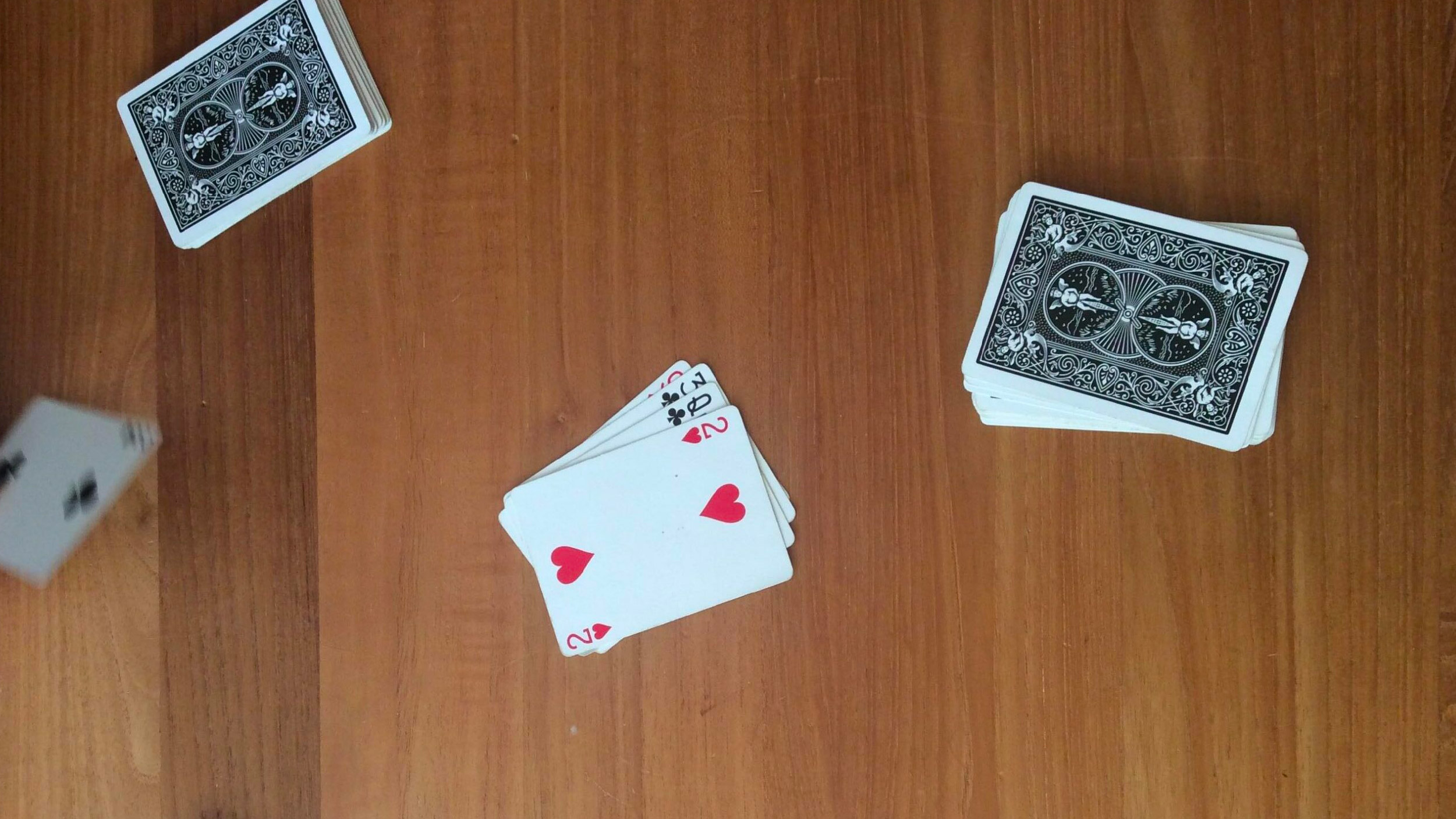
Snap is the kind of card game that looks harmless until someone’s reflexes wake up. It’s simple: flip cards, watch for matches, react fast. Yet it has an oddly timeless appeal because it turns a basic deck into a shared moment—everyone staring at the same pile, waiting for the pattern that triggers chaos.
That simplicity is why snap card games show up everywhere: family nights, classrooms, travel breaks, and quick matches when you want something light. It also adapts well as 2 player card games, where the duel becomes cleaner and the pace becomes surprisingly intense.
What “Snap” is trying to test
Snap isn’t about strategy. It’s a mix of:
-
attention (noticing what appeared),
-
speed (reacting first),
-
and a little luck (when the matches happen).
That combination makes it fair for beginners and still fun for people who usually prefer heavier games—because the investment per round is tiny.
The classic setup
You need a standard 52-card deck.
-
Shuffle the deck and deal all cards evenly between players (or as evenly as possible). Keep your pile face down.
-
Place a clear space in the center for the shared pile.
Players do not look at their cards. The cards are played face up, one by one.
How a round works (basic rules)
Players take turns placing the top card of their pile face up onto the center pile.
When two consecutive face-up cards match in rank (for example, 9 then 9), the first player to call “Snap!” wins the center pile.
The winner takes the whole center pile, turns it face down, and adds it to the bottom of their personal pile. Then play resumes.
That’s the entire engine: flip, match, claim, recycle.
How you win
A common win condition: you win by collecting all the cards.
But Snap can take longer than people expect because piles keep recycling. Many groups make it cleaner by using a time limit (like 5–10 minutes) and declaring the winner as the player with the larger pile at the end.
If you’re playing with kids, the time limit keeps it fun instead of endless.
Two-player Snap: a small rule tweak that helps
With two players, Snap can feel slightly “turn-based” rather than truly reactive. To make it more lively, many pairs use one of these simple tweaks:
-
Both players flip at the same rhythm (a steady tempo), keeping attention high.
-
Or both players flip simultaneously onto separate small piles, with Snap triggered when top cards match.
You don’t need to over-engineer it. The goal is to keep the game moving without disputes.
Common variations you’ll hear about
Snap travels with house rules. These are the ones worth deciding before you start:
“Snap Pool”
Instead of collecting the pile immediately, snapped cards go into a separate “pool.” Some versions award the pool when someone snaps again later. It adds a second layer of tension.
“Call Snap” vs “Slap Snap”
Some groups call “Snap!” out loud. Others require a physical slap on the pile. Slapping is more exciting, but it also increases arguments. If you use slap rules, define what counts as a valid slap (first contact vs full hand).
Multiple decks or themed decks
Snap often uses picture or animal decks for children, where “matching” can mean matching images rather than ranks. The same structure applies.
The biggest source of arguments (and how to avoid it)
Snap games fall apart when players disagree about what “first” means.
Solve it early:
-
Decide whether the snap is won by first shout or first touch.
-
If it’s a shout game, agree whether you can shout without touching.
-
If it’s a slap game, agree what counts: fingertip touch, palm down, or full hand.
This takes 10 seconds and saves you 10 minutes.
A subtle beginner mistake
Beginners often stare at their own hand area and miss the center pile. In Snap, the center is the only thing that matters. The easiest improvement is visual discipline: eyes on the pile, not on your next card.
Snap works because it’s pure and immediate: reveal cards, watch for matches, react first, and keep the pile moving. Whether you play it gently with family or turn it into a reflex duel, snap card games remain a reliable way to turn a deck into shared laughter—especially as 2 player card games, where every match feels personal.